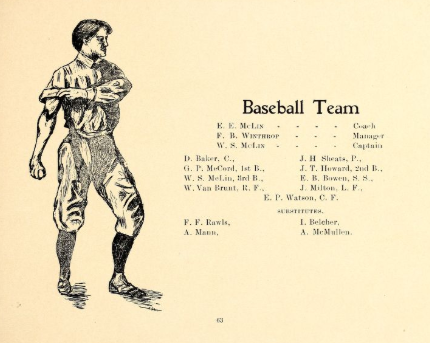
Florida State College (FSC), the institution that would become Florida State University, fielded their first baseball team in 1902. The team played just three seasons, disbanding when the 1905 Buckman Act reorganized the state’s educational institutions and made FSC available only to white women.
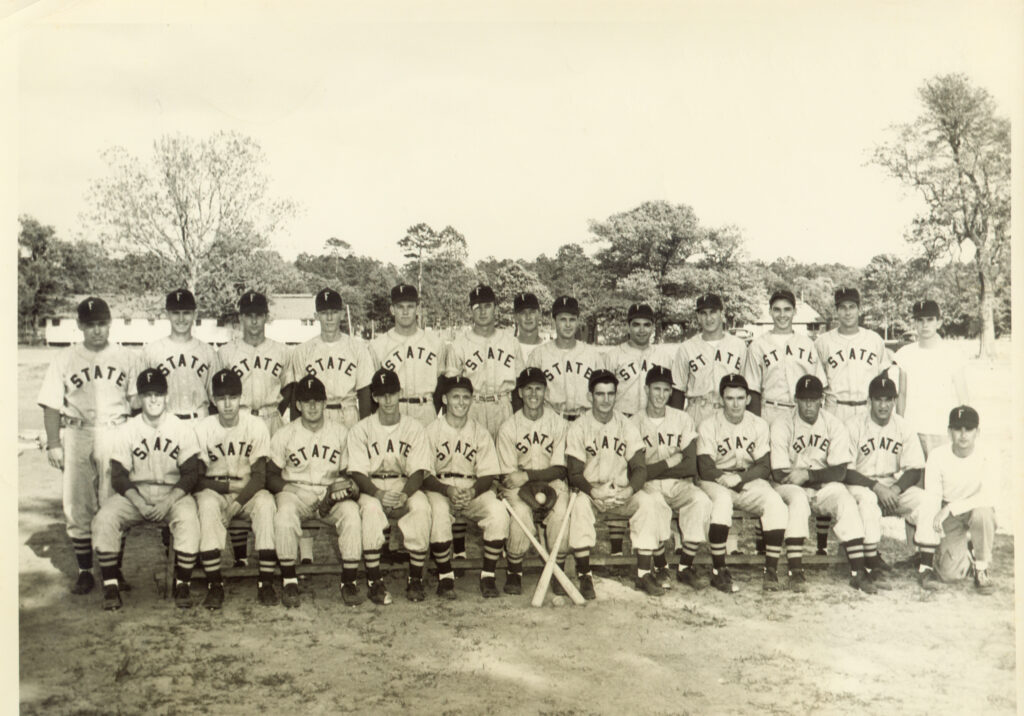
In May 1947, Florida’s governor signed an act returning the institution to coeducational status and renaming it Florida State University. The following spring, the FSU baseball team played for the first time in over 40 years, going 9-8 under coach Charlie Armstrong.
Led by All-American SS Dick Howser, righthander P Jerry Boxer and head coach Danny Litwhiler, the Seminoles clinched their first College World Series appearance in 1957. Though FSU fell in the second round, it marked the first of 24 CWS appearances — making the Noles one of college baseball’s most successful teams.
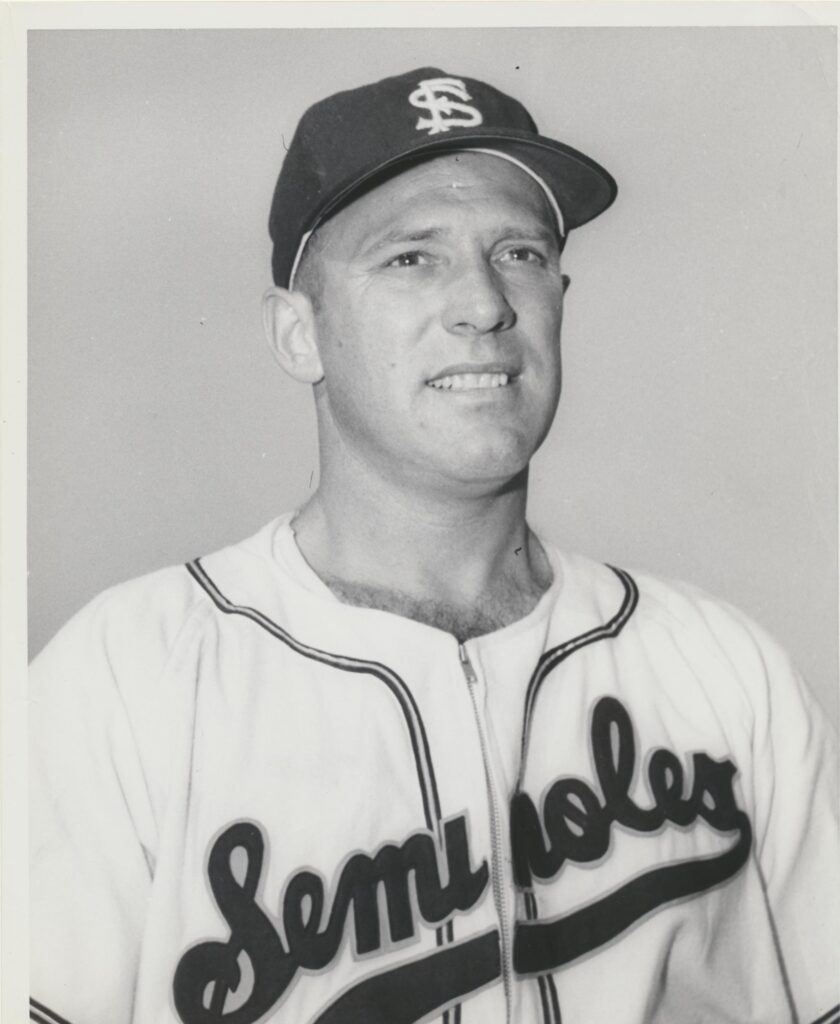
On October 30, 1965, Fred Flowers became the first Black student-athlete in FSU history, playing for the baseball team. In his first appearance, Flowers was the varsity team’s winning pitcher in an exhibition match against an alumni All-Star team. Flowers graduated from FSU with a bachelor’s degree in 1969 and a master’s degree in 1973.
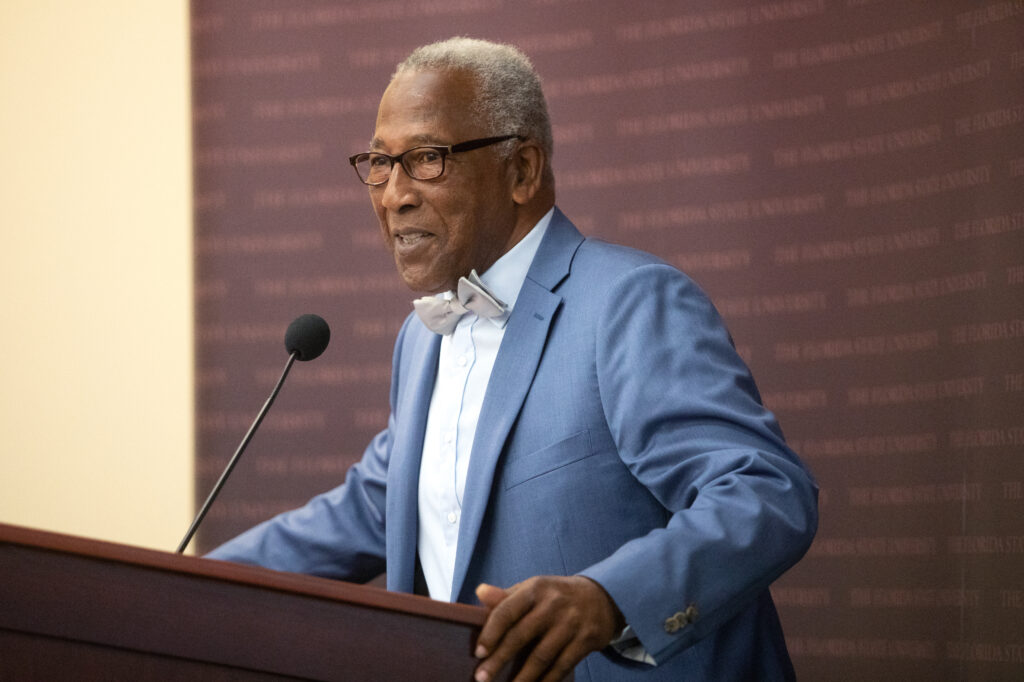
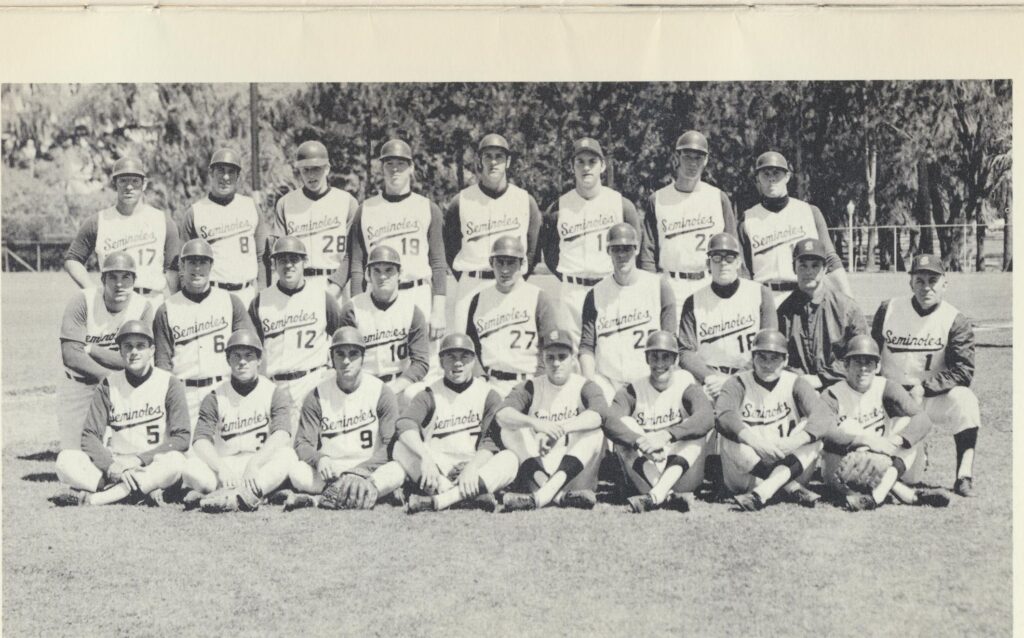
FSU made their deepest postseason run to date by reaching the 1970 College World Series final against Southern California. Righty pitcher Gene Ammann made program history with a 15-0 record on the season, then posted a blistering 1.00 ERA in 18 innings of work in the CWS. The Noles enjoyed offensive power from All-American 2B Dick Nichols, OF Johnny Grubb and 3B Ron Cash. In the title game, FSU came up just short with a 2-1 loss in 15 nail-biting innings. Still, the season remains one of the best for the Garnet and Gold.
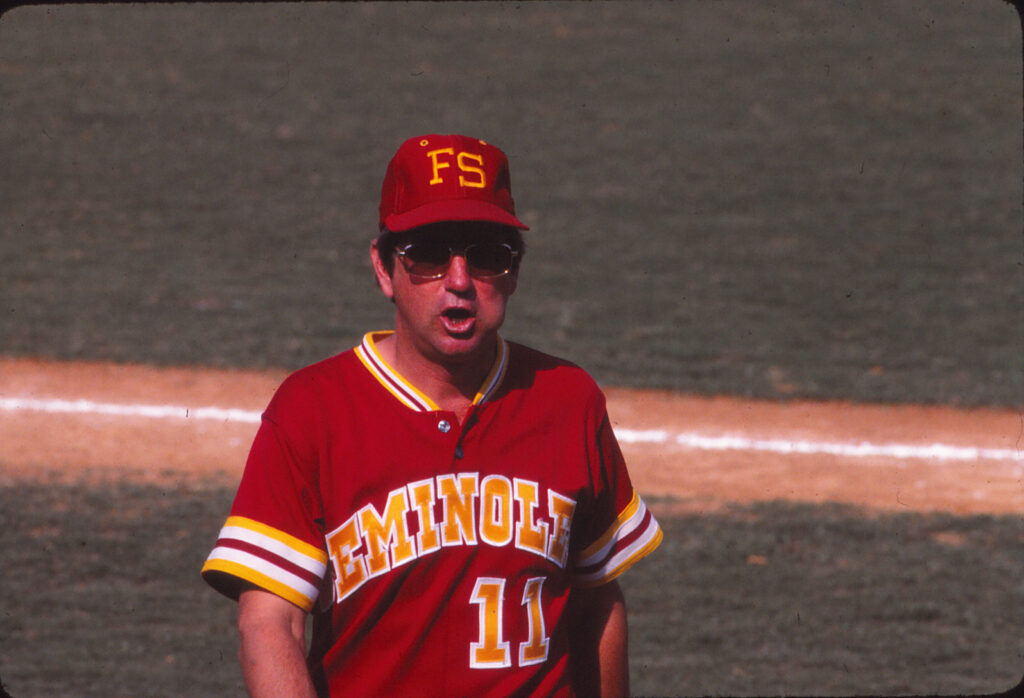
Former FSU player and assistant coach Mike Martin took over as head coach in 1980. Over the next 40 seasons, Martin would become the winningest coach in college baseball history with 2,029 victories, including 17 College World Series appearances. The Seminoles reached the NCAA Tournament every year of Martin’s four-decade tenue, and he guided the team to 19 conference championships. When “11” retired in 2019, Martin secured his place as one of the greatest coaches in all of college sports.
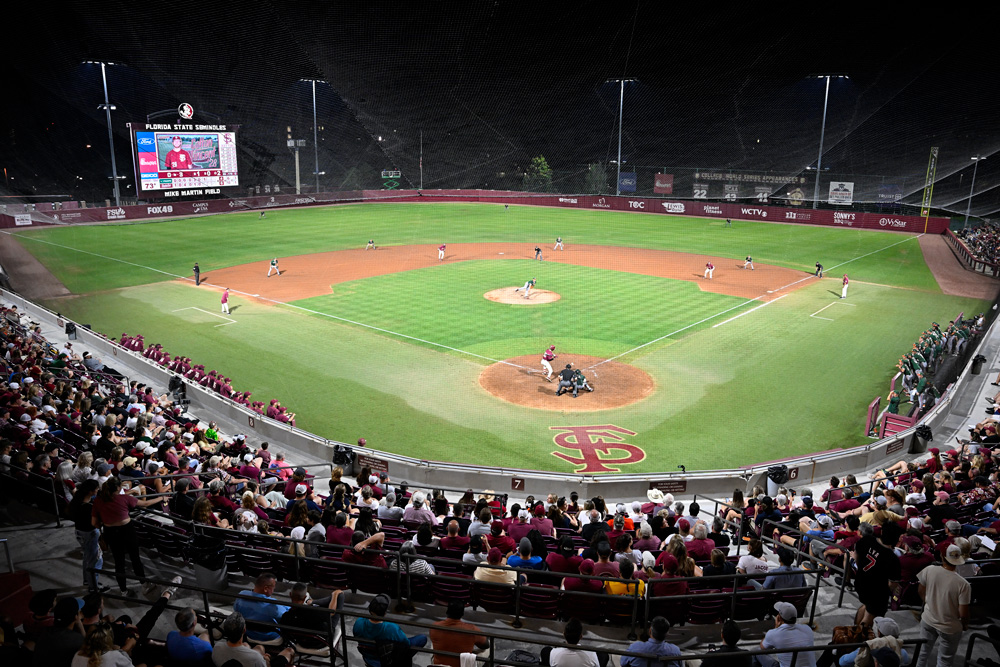
After 35 years playing at Tallahassee’s Centennial Field and on the future site of FSU’s new baseball stadium, Seminole Field officially opened in 1983. Five years later, FSU renamed the venue as Dick Howser Stadium in honor of the team’s first All-American and MLB draft pick. In 2005, FSU named the playing surface Mike Martin Field after the program’s legendary coach. Dick Howser Stadium is recognized today as one of the nation’s best college ballparks and has welcomed over 5 million fans since opening.
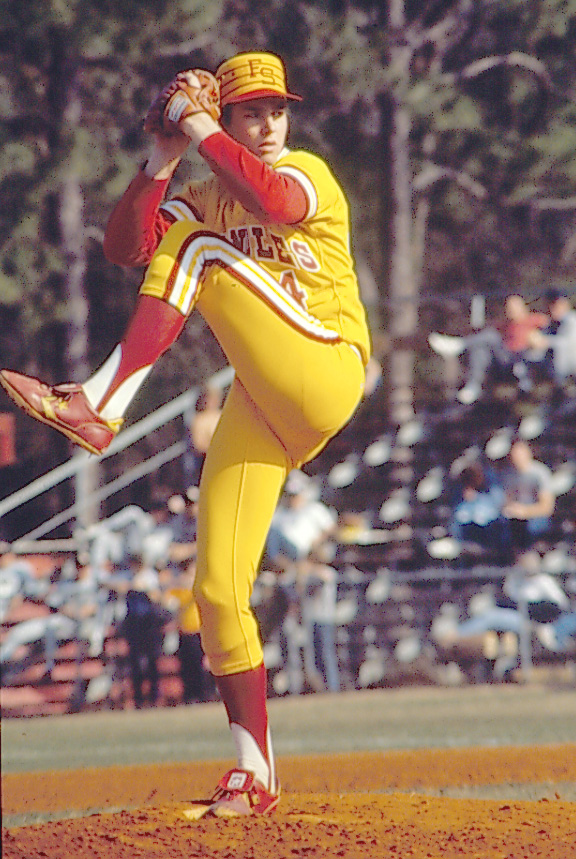
During the magical 1986 season, righthanded pitcher Mike Loynd set program records with 20 wins and 233 strikeouts. The eventual Golden Spikes winner led the Seminoles deep into the College World Series, supported by All-Americans SS Luis Alicea, P Richie Lewis, 2B Bien Figueroa and OF Paul Sorrento. FSU fell to Arizona State in the championship game, but their overall record of 61-13 remains the most wins in a season in Noles history.
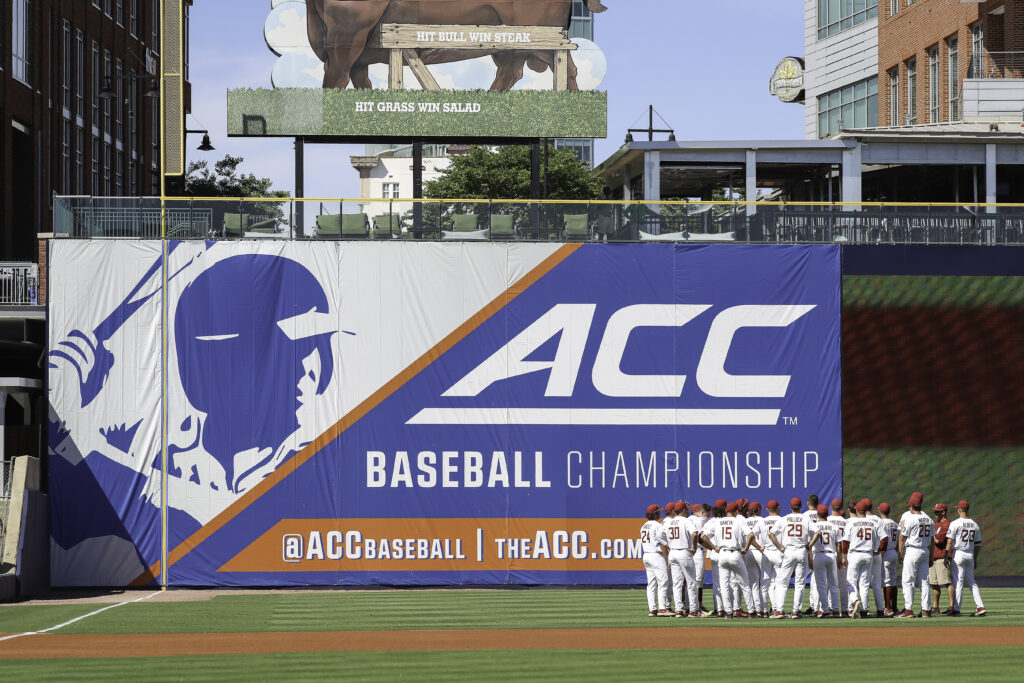
Following 15 seasons with the Metro Conference, FSU officially joined the ACC in 1991, with baseball participating in ACC play in 1992. The Seminoles dominated the Metro in the late 1980s and early 1990s and were eager to face even greater competition in the ACC. Since then, FSU has won nine regular season conference championships, eight conference tournament championships and dozens of awards for ACC Players of the Year, Coaches of the Year and Tournament MVPs.
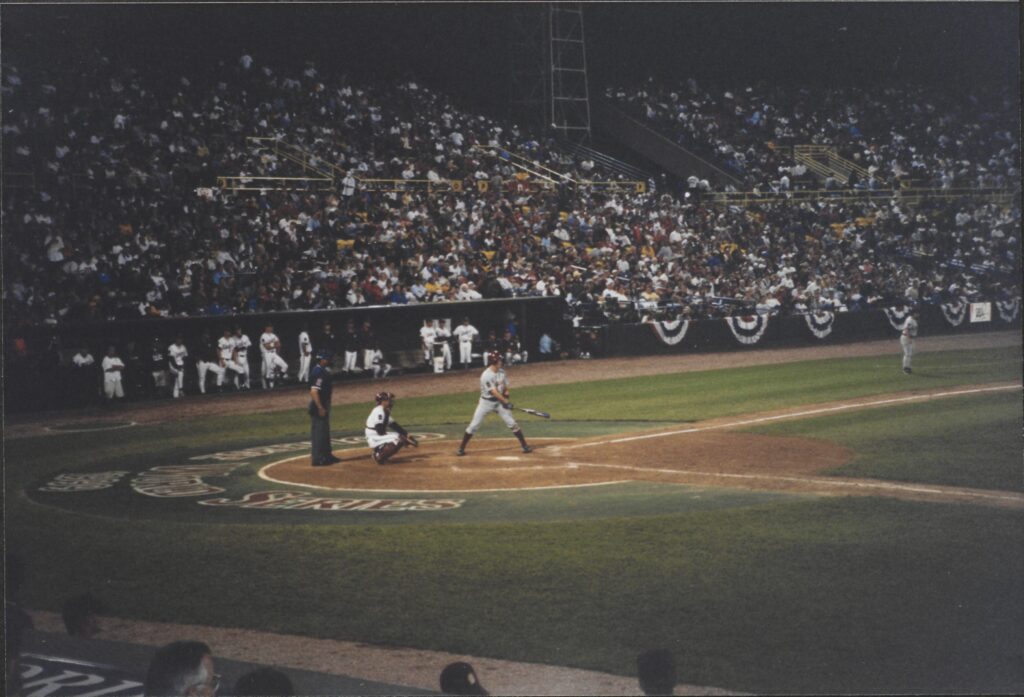
Behind the bats of OF John-Ford Griffin, 2B Marshall McDougall and OF Matt Diaz — who all hit .379 or better — the Seminoles sported a hot offense in 1999. With another 50-win season, FSU cruised to the College World Series. But the Noles faced a challenge against in-state rival Miami in the championship game. Freshman P Blair Varnes heroically pitched six innings despite a ruptured ACL, and DH Sam Scott hit a home run to keep the game close. Ultimately, FSU fell to Miami 6-5, ending another storybook trip to college baseball’s biggest stage.
Buster Posey became the most decorated player in Seminole baseball history in the 2008 season. The generational catcher took home the Golden Spikes Award, the Rawlings Gold Glove Award, the Dick Howser Award and the Johnny Bench Award (an award later named after Posey to honor his greatness). He was also the ACC Player of the Year, a consensus All-American and National Player of the Year by multiple outlets. As the winner of the ACC’s triple crown, Posey led FSU to their first College World Series since 2000. He continued his success over a 13-season career with the San Francisco Giants, winning three World Series titles, the 2012 NL MVP Award, 2010 NL Rookie of the Year Award, three Silver Sluggers and a Gold Glove.
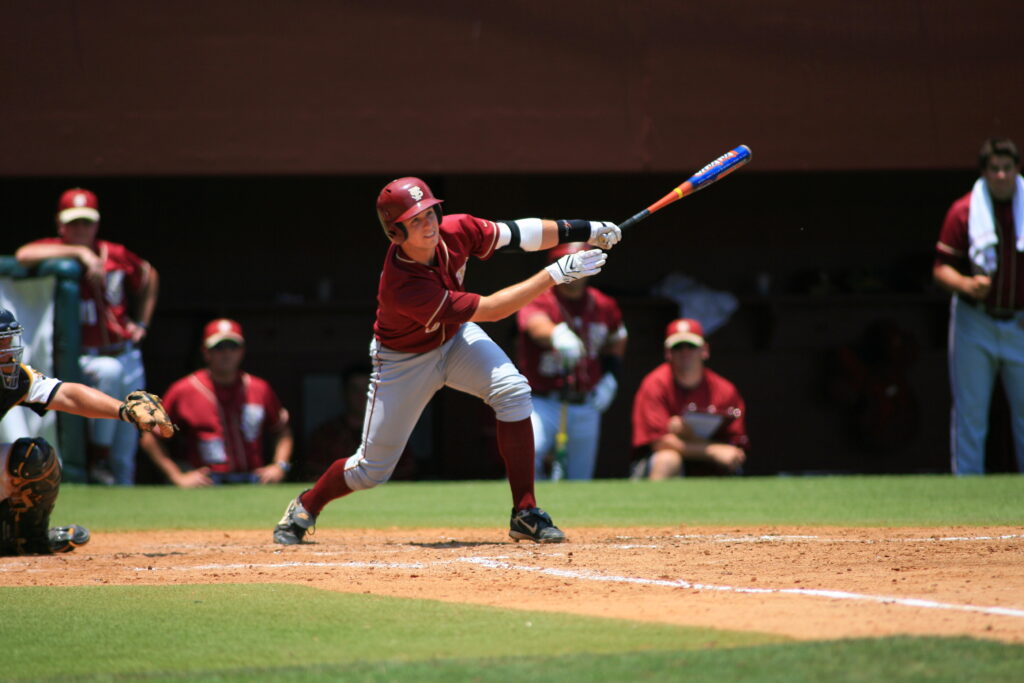
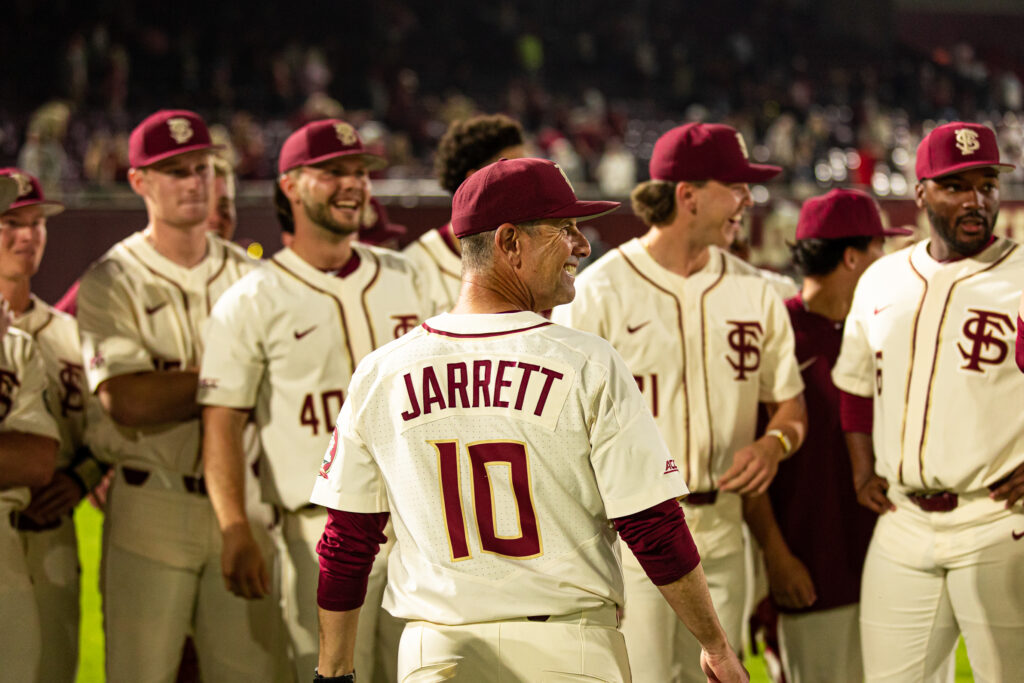
FSU welcomed a familiar face in 2022 by naming Link Jarrett as head coach. A Tallahassee native, Jarrett played shortstop for the Seminoles from 1991–1994 before a successful coaching career at Notre Dame. After a challenging first season in 2023, Jarrett and the Noles returned to their winning ways with consecutive NCAA tournament bids in 2024 and 2025 and another College World Series appearance in 2024.